Product Lifecycle Management (PLM): Expert Guide for Businesses

Summary: Product lifecycle management (PLM) is a strategic approach to managing every stage of a product’s lifecycle—from concept to retirement—while improving efficiency and reducing risk. In this PLM guide, readers will learn how a product lifecycle management system strengthens business processes and supports long-term growth.

  • What product lifecycle management PLM is and how a PLM system works
  • How a product lifecycle management system supports product development processes
  • Ways PLM improves collaboration across engineering, manufacturing, and leadership teams
  • How centralizing data helps manage the product’s lifecycle and reduce errors
  • Why the PLM industry is critical for modern, innovation-driven businesses

In today’s competitive and fast-moving marketplace, companies must manage complex products, distributed teams, and evolving customer demands—all while maintaining quality and controlling costs. That’s where product lifecycle management (PLM) becomes essential.

This PLM guide is designed to give business leaders, engineers, and operations teams a clear understanding of how a product lifecycle management system supports innovation, efficiency, and long-term growth. Whether you are new to the PLM industry or refining an existing strategy, understanding the fundamentals of product lifecycle management PLM is the first step toward operational excellence.

What Is Product Lifecycle Management?

At its core, product lifecycle management is a structured approach to managing a product’s lifecycle—from concept and design through manufacturing, service, and retirement. A PLM system connects people, data, and workflows so that every phase of the product’s lifecycle is documented, controlled, and optimized.

Unlike disconnected tools or spreadsheets, a modern product lifecycle management system creates a centralized environment where engineering, manufacturing, quality, and leadership teams collaborate using accurate, real-time data. This ensures consistency across departments and improves decision-making at every stage.

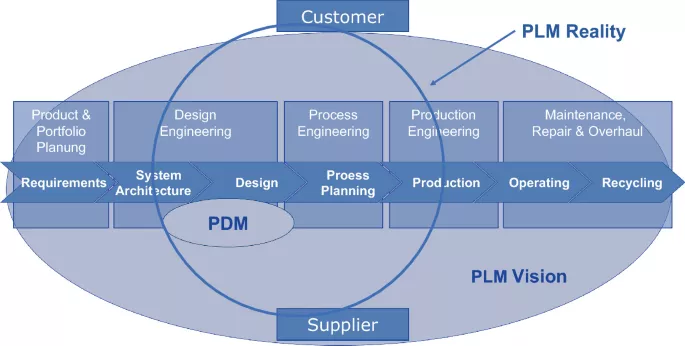
PLM Product Lifecycle Management process infographic

Why PLM Matters in Modern Business

The PLM industry has evolved significantly in recent years. As products grow more complex and supply chains more global, businesses must manage large volumes of data while coordinating cross-functional teams.

A well-implemented PLM system strengthens core business processes by:

  • Standardizing product development processes
  • Improving visibility into the product’s lifecycle
  • Supporting compliance and documentation requirements
  • Enhancing collaboration across departments
  • Reducing errors caused by outdated or inconsistent data

By aligning design, engineering, and manufacturing teams, PLM plays a direct role in improving efficiency and accelerating innovation.

How a PLM System Supports Product Development

Modern product development processes are intricate and fast-paced. From early ideation to final production planning, each stage requires coordination and precision. A product lifecycle management system ensures that all stakeholders work from a single source of truth.

For example, when engineering updates a design, the PLM system automatically tracks revisions, manages approvals, and ensures manufacturing receives the correct specifications. This structured approach to managing the product’s lifecycle helps prevent miscommunication, duplication of work, and costly rework.

The result? Better collaboration, stronger quality control, and smoother product launches.

Reducing Errors and Driving Continuous Improvement

One of the most significant benefits of product lifecycle management PLM is reducing errors. By centralizing product data and standardizing workflows, organizations minimize version conflicts, design mistakes, and supply chain disruptions.

When teams follow consistent processes supported by a robust PLM system, companies experience fewer delays and improved overall performance.

Additionally, PLM provides valuable insights into performance metrics across the product’s lifecycle. Leaders can identify bottlenecks, assess risk, and implement improvements that strengthen both operational efficiency and product quality.

Building a Strong PLM Strategy

For organizations exploring the PLM industry or refining their technology stack, this guide serves as a foundation. Successful implementation requires more than software—it demands alignment between people, processes, and technology.

By investing in a scalable product lifecycle management system, businesses gain the structure needed to streamline business processes, optimize product development processes, and support innovation at every stage of the product’s lifecycle.

In short, product lifecycle management is no longer optional. It is a strategic capability that empowers organizations to compete, adapt, and thrive in a complex and evolving marketplace.

Comprehensive Guide to Product Lifecycle Management (PLM)